

Signs Your Roof Has Wind Damage After a Storm
A storm can loosen shingles without tearing them off, so it pays to know where to look before the next rain.
Schedule your inspection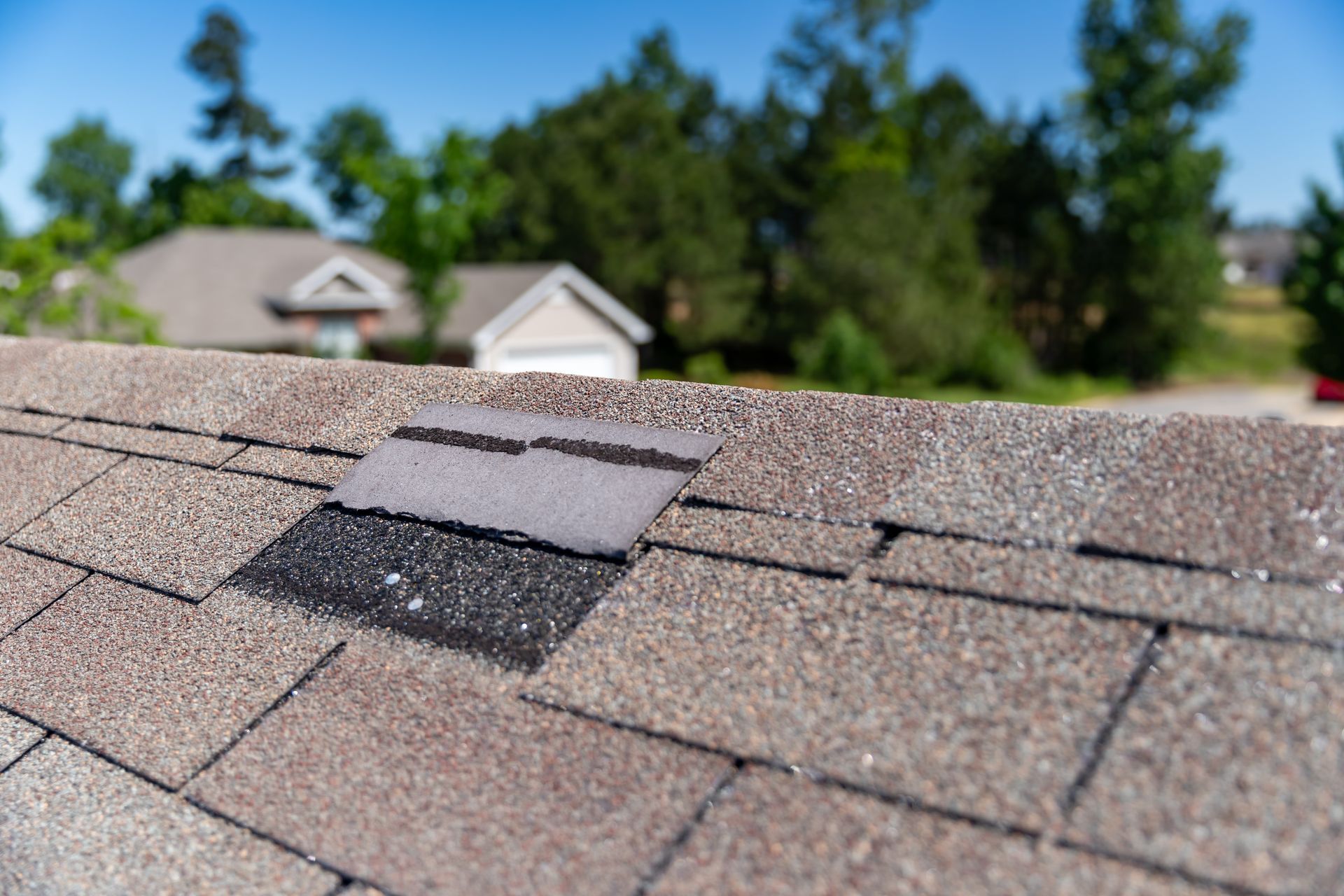
The clearest signs of wind damage after a storm are missing or torn shingles, shingle pieces in the yard, and tabs that are lifted or creased along a fold line. Inside, a new water stain or a drip after the storm passes tells you the damage has gone past the surface.
Not all of it is easy to see. A strong gust can bend a shingle up, break the tar strip that holds it down, and let it settle back looking almost normal. That shingle will flap and leak in the next storm even though it looks fine today.
Most Orange Park homeowners can do the first round of checking from the yard and the attic hatch. Nobody needs to climb a ladder the day after a storm to know whether a roofer should come out.
In this guide
What wind damage looks like from the ground
Start with a slow walk around the house once the weather clears and it's safe to be outside. Look at every side of the roof. Wind usually does the most harm on the side that faced the gusts, and along the edges and ridge, where it can get under shingles most easily.
Signs to look for:
- Bare patches where shingles are gone, often showing dark felt paper or wood underneath
- Shingle pieces in the yard, the gutters, or a neighbor's driveway
- Creased shingles, with a straight line across a tab where it bent up and folded back. The crease weakens the shingle, and it tends to tear off later.
- Tabs that look wavy or sit higher than the ones beside them
- Missing or cracked ridge caps, the folded shingles that run along the peak
- Bent gutters, loose metal along the roof edge, or damaged vent covers
- Limbs or branches resting on the roof
Then go inside. Check the ceilings in rooms under the damaged side, especially around light fixtures and in closets. If you can reach the attic safely from the hatch, shine a flashlight on the underside of the roof and look for wet spots, drips, or daylight.
Watch the downspouts too. A fresh pile of gritty granules at the bottom after a storm often means shingles were scuffed or torn up top. If you're seeing several of these signs, the storm damage roof repair page explains what that work usually involves.
What should you do in the first day after a storm?
Keep yourself safe first, then protect the inside of the house, then get the damage on record. In that order.
- Stay off the roof and off ladders. Wet shingles are slick, gusts can come back, and damaged spots may not hold your weight.
- Look for downed power lines or limbs hanging on wires before you walk the yard. Keep your distance and report them to the power company.
- Take photos and short videos from the ground of every side of the house, plus close shots of any shingles that came down. Your phone keeps the date and time.
- If water is coming in, set out buckets, move furniture and electronics, and lay down towels. Stay out from under any ceiling that sags or bulges with water.
- Call your insurance company to report the damage if it looks significant, and write down the claim number they give you.
- Call a roofer for a look, and ask about emergency roof repair or tarping if there's an open spot or an active leak.
Keep any shingles you picked up from the yard. They show the color and style of your roof and how the pieces broke, which helps whoever checks the damage next.
What can wait, and what can't
Anything that lets water into the house can't wait. A bare patch, a hole from a limb, or a drip during rain needs a temporary cover as soon as it's safe, because North Florida rarely goes long without another shower.
A tarp is the usual stopgap. It's a heavy plastic sheet fastened over the damaged area to keep rain out until the roof can be fixed for good. It buys you time, and that's all it's meant to do.
Some damage can wait a few days for a proper look, like a handful of creased shingles with no leak or a bent gutter. Don't let a few days stretch into months, though. Creased and lifted shingles have lost their grip, and the next afternoon storm can strip them off and turn a small roof repair into a bigger one.
If you're unsure which group your damage falls into, treat it as urgent. Learning that it's minor costs far less than replacing a soaked ceiling.
How Weaver Construction Southeast helps after the wind dies down
Weaver Construction Southeast offers storm damage assessments and emergency roof tarping, with photo documentation of what was hit. For a homeowner looking at a bare patch on the roof, that covers two needs at once: something to keep the rain out, and clear pictures of the damage as it looked right after the storm.
The company also offers insurance claim assistance by documenting the damage, so you aren't trying to photograph a roof you shouldn't be standing on. Weaver Construction Southeast is not an insurance carrier, attorney, or public adjuster, so questions about your coverage and any settlement stay between you and your insurer.
Why wind is hard on roofs around here
Orange Park gets its share of strong summer thunderstorms, and some of the worst gusts come in short bursts at the front edge of a storm. Those quick blasts can rip shingles off one side of a house while the house next door comes through untouched.
Trees are a big part of the picture. Tall pines and old live oaks shade many neighborhoods, and wind snaps limbs that land on roofs or drag across shingles on their way down. A limb doesn't have to puncture the roof to do harm. Scraping alone can tear tabs loose and knock off granules.
Open water lets wind build. Homes along the St. Johns River and Doctors Lake take gusts that cross a long, flat stretch with nothing to slow them, while houses tucked among trees get some shelter. Age matters too. After years of summer heat, the tar strips that hold shingles down get weaker, and a gust a newer roof would ride out can peel an older one back.
Get the roof checked before the next rain
Once your photos are taken and the inside is protected, the next step is having someone who knows roofs look at yours up close. Weaver Construction Southeast handles storm damage assessments and emergency tarping for homeowners around Orange Park, which makes it a sensible first call once the wind dies down. Call 904-756-2351 or send a message through the contact page.
Storm Damage Questions
How strong does the wind have to be to damage shingles?
There's no single number. A newer roof in good shape can ride out strong gusts, while an older roof with dried-out shingles and weak tar strips may lose pieces in an ordinary summer storm. How the shingles were nailed, the shape of the roof, and how exposed the house is all play a part, which is why two houses on the same street can fare so differently.
Should I report a few missing shingles to my insurance company?
That's your call, and your agent can explain how your policy works. Many Florida homeowners have a separate hurricane deductible, which can be much higher than the regular one, so a small repair may cost less than the deductible. Either way, keep your storm photos and the shingles you picked up. They help if more damage shows up later.
Is there a deadline for reporting storm damage in Florida?
Yes. Florida law sets a time limit for reporting property claims, and that window has been shortened in recent years. Your policy also has its own notice rules. The safest habit is to report damage soon after the storm while the details are fresh, and to read the claims section of your policy or ask your agent what applies to you.
How long can a tarp stay on a roof?
A well-fastened tarp is meant to last weeks, not seasons. Sun breaks down the plastic and wind works at the fastenings, so it can loosen or tear if it stays up too long. Plan on getting the damaged area repaired as soon as you reasonably can, especially during hurricane season, when one storm can follow another.
What if a tree limb is still lying on the roof?
Leave it where it is unless it's small and you can reach it from the ground without a ladder. Pulling a heavy limb off can tear more shingles or open a hole the branch itself was plugging. If the limb is large, near power lines, or went through the roof, call a tree service or roofer, and keep people out of the rooms underneath.
Can I stay in my Orange Park home if the roof is damaged?
Usually, yes, as long as the ceilings are holding, the power is safe, and water isn't running near outlets or light fixtures. Stay out of any room where a ceiling sags or water drips near electrical fixtures, and shut off power to that area if you can do it safely. If the roof line itself is sagging, leave the house and have it checked first.
Storm hit your roof?
Keep your storm photos handy and stay off the ladder. A roofer can take the close look your roof needs after high wind. Call 904-756-2351 or contact us online.
Schedule your inspection